Bring Living Light Into Your Classroom: 6 Fun Ways to Teach Elementary Science With PyroDinos
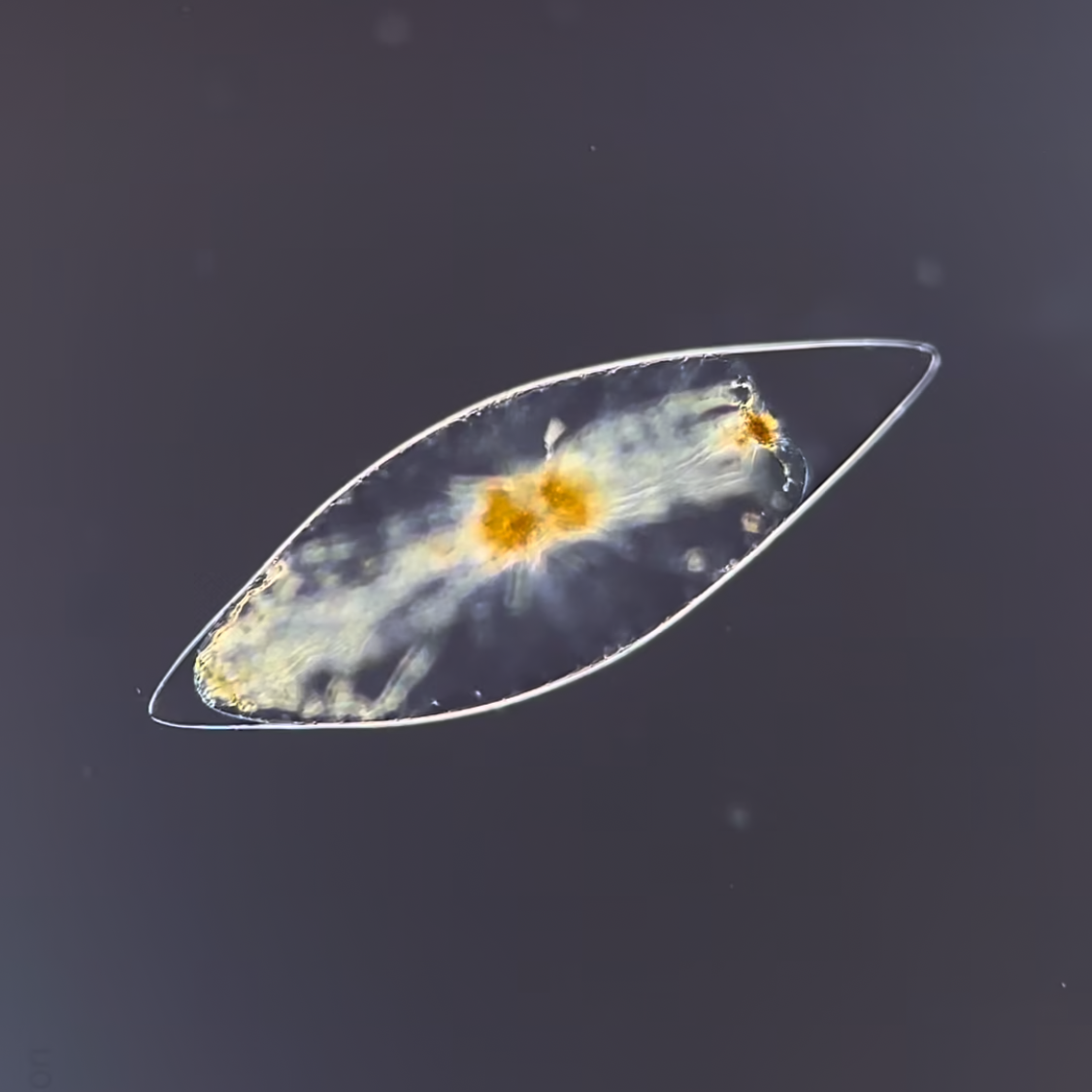
From glowing microorganisms to ocean ecosystems, discover how PyroDinos can turn everyday science lessons into unforgettable hands-on learning experiences.
Imagine turning off the classroom lights, gently swirling a container of seawater, and watching it come alive with brilliant blue light. Now imagine the questions your students will ask.
"How do they glow?"
"Are they really alive?"
"Can we make them grow?"
These are exactly the kinds of questions that make science education exciting.
At PyroFarms, we believe some of the best science lessons begin with curiosity. That's why PyroDinos, our living bioluminescent microorganisms, make such fascinating classroom companions.
They're easy to maintain, require no complicated laboratory equipment, and offer opportunities to explore biology, chemistry, ocean science, and even the scientific method.
Here are six ways elementary school teachers can bring the science of living light into their classrooms.
1. What Makes Something Alive? Exploring Microorganisms
Recommended grades: K–3 | Topics: Living organisms, cells, observation


Big question: Can something be alive even if we can't see it?
Most children recognize living things like dogs, trees, insects, and flowers. But what about organisms too small to see individually?
PyroDinos are tiny, single-celled marine organisms called dinoflagellates. Each individual PyroDino is a living cell capable of carrying out essential life processes.
Although they may appear to be nothing more than brownish seawater during the day, they're actually a community of thousands of living organisms.
Classroom activity: Living or Nonliving?
Ask students to identify examples of living and nonliving things around the classroom.
Then introduce a container of PyroDinos and ask:
-
Do you think there's anything alive in this water?
-
How could we find out?
-
What do living organisms need to survive?
-
Can one cell be an entire living organism?
If a classroom microscope is available, allow students to examine a small sample. Even without one, students can observe the culture during the day and compare it with videos or a live demonstration of its nighttime glow.
Learning takeaway: Living things come in all shapes and sizes, including microscopic organisms made of just one cell.
2. Bioluminescence: How Can Living Things Make Light?
Recommended grades: K–5 | Topics: Chemical reactions, light, animal defenses


Big question: How can something glow without electricity or batteries?
Bioluminescence is the production of light by a living organism through a chemical reaction.
Some familiar examples include fireflies, certain mushrooms, deep-sea creatures, and, of course, PyroDinos.
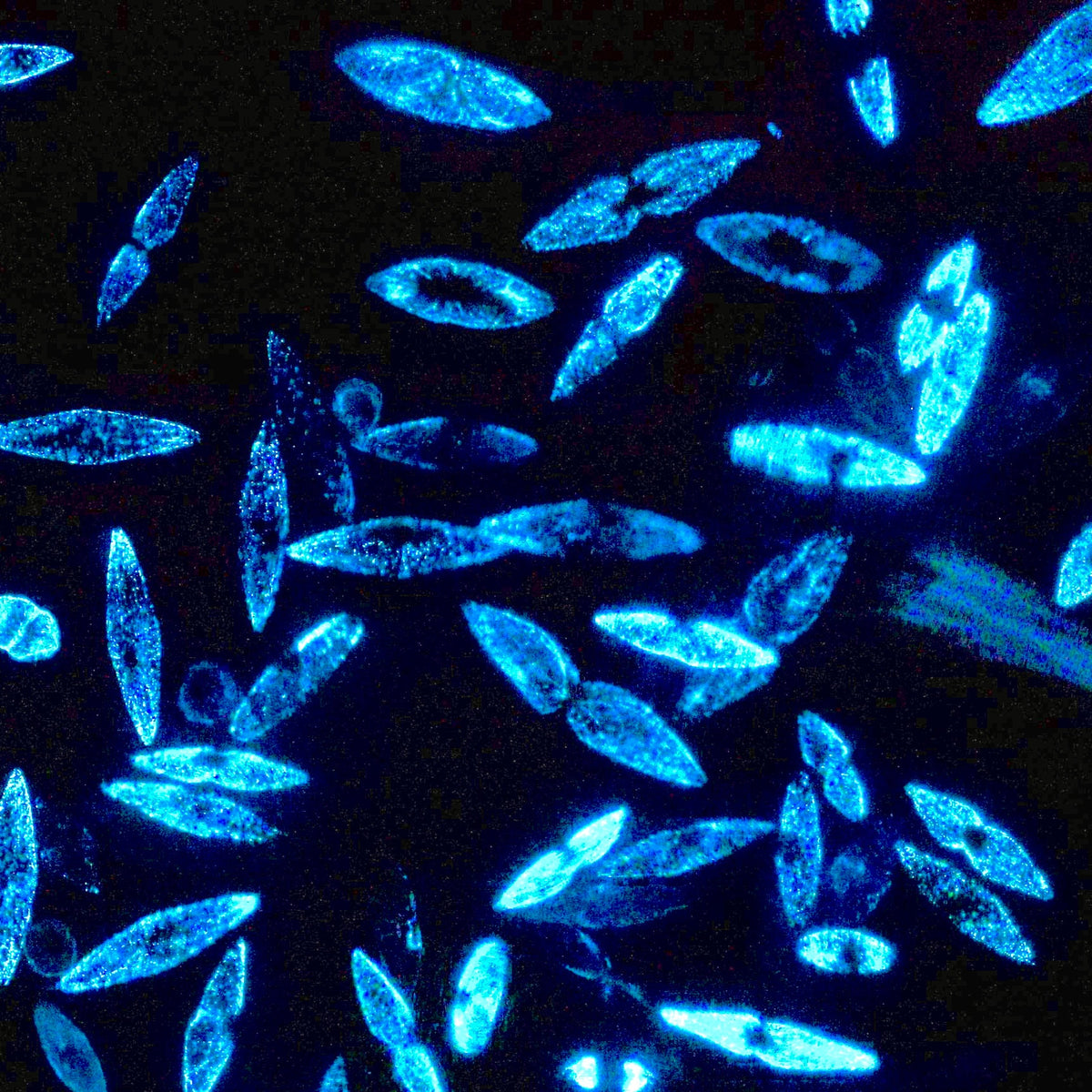
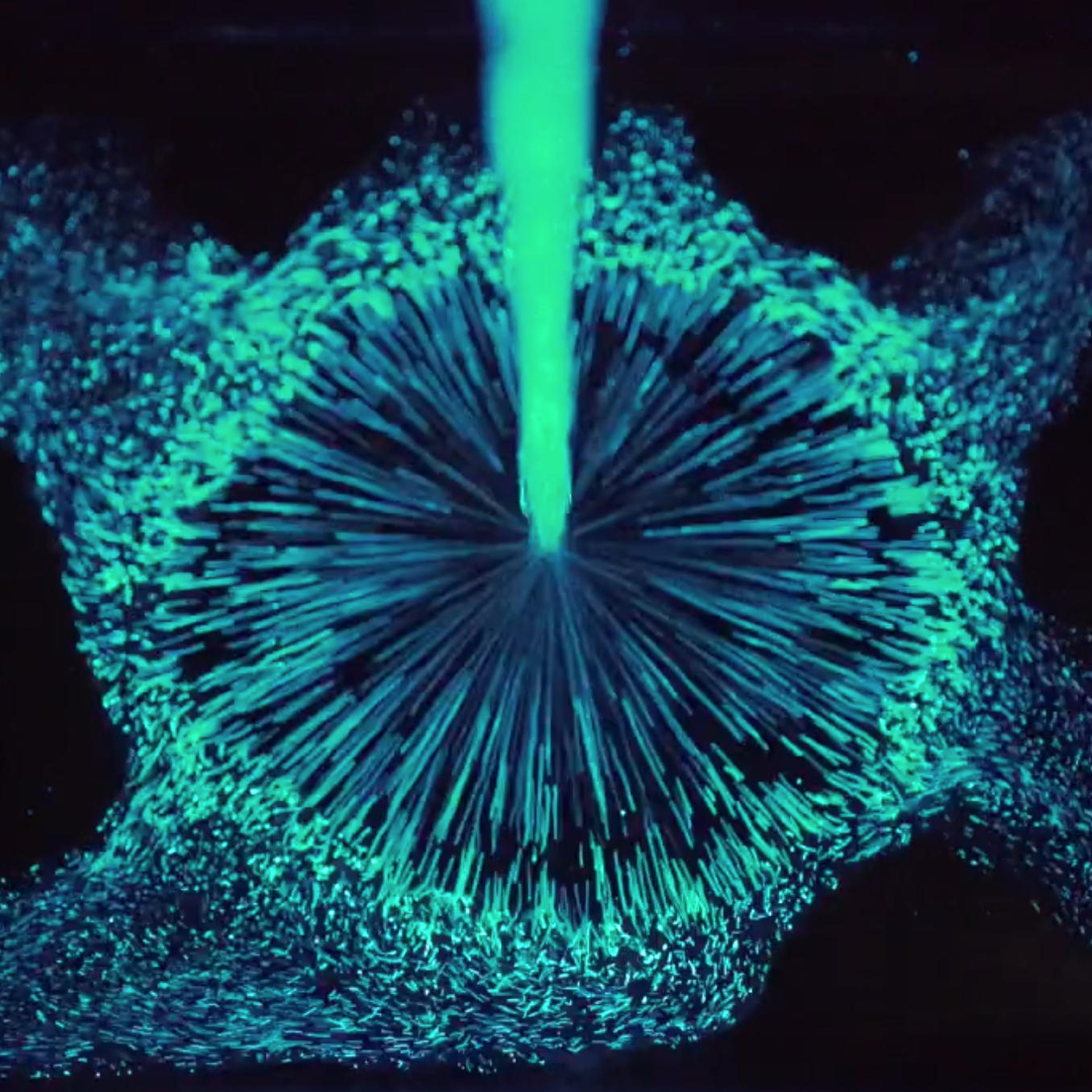
Inside each PyroDino are chemicals that can react to produce blue light. When the organisms are gently disturbed during their nighttime cycle, they produce brief flashes of bioluminescence.
In the ocean, this behavior may help protect them from predators. One scientific hypothesis suggests that these flashes act like a burglar alarm, potentially attracting larger predators that might eat whatever is attacking the dinoflagellates.
Classroom activity: Make Living Light
During the PyroDinos' nighttime cycle:
-
Darken the classroom as much as possible.
-
Show students a container of PyroDinos sitting still.
-
Gently swirl the container.
-
Watch the brilliant blue flashes appear.
-
Allow the culture to rest before repeating the demonstration.
Ask students why the light appears when the water moves but fades when the movement stops.
For younger students, compare PyroDinos with fireflies. For older students, introduce the terms luciferin and luciferase, two components involved in the light-producing chemical reaction.
Learning takeaway: Some organisms produce their own light through chemical reactions, often as an adaptation that helps them survive.
3. Photosynthesis: How Do PyroDinos Use Sunlight?
Recommended grades: 2–5 | Topics: Photosynthesis, energy, growth
Big question: Can living things make their own food using light?
Like plants, PyroDinos are photosynthetic organisms. They capture light energy and use it to produce the chemical energy they need to live and grow.
This makes them an excellent example for introducing photosynthesis without needing to grow a garden.
Unlike humans and other animals, which must consume food to obtain energy, PyroDinos can harness energy from light.
They also need water, dissolved nutrients, and suitable environmental conditions.
Classroom activity: Follow the Energy
Ask students to draw a simple diagram showing how energy moves from the Sun to ocean life.
Sunlight → PyroDinos → Small marine animals → Larger fish
Explain that PyroDinos belong to the plankton community and contribute to marine food webs.
Students can compare a PyroDino culture to a classroom plant and discuss what both organisms need to stay healthy.
For older students, keep a daily observation journal that records the light schedule, appearance, and visible changes in a culture over several weeks.
Learning takeaway: Sunlight supports life not only on land but throughout the oceans, where microscopic photosynthetic organisms form part of the foundation of marine ecosystems.
4. Biological Clocks: Why Do PyroDinos Glow at Night?
Recommended grades: 2–5 | Topics: Circadian rhythms, day/night cycles, biological adaptations
Big question: How do PyroDinos know when it's nighttime?
Here's something remarkable: PyroDinos have an internal biological clock.
It's called a circadian rhythm, and humans have one too.
Our circadian rhythm helps regulate when we feel awake or sleepy. PyroDinos use their internal clock to coordinate their daytime and nighttime activities.
During their daytime cycle, they capture energy through photosynthesis. During their nighttime cycle, they're capable of producing bioluminescence when physically stimulated.
Even more fascinating, their internal clock can adjust when their daily lighting schedule changes.
Classroom activity: Reverse Their Day and Night
With a simple LED lamp and outlet timer, teachers can gradually adjust the PyroDinos' lighting schedule so their nighttime cycle occurs during school hours.
For example:
-
Light ON: 6:00 PM–6:00 AM
-
Light OFF: 6:00 AM–6:00 PM
After approximately 5–7 days on a consistent reversed schedule, the PyroDinos can adapt, allowing students to observe their bioluminescence during the school day in a darkened classroom.
Ask students to compare their own sleep schedules with the PyroDinos' biological clock.
Learning takeaway: Living organisms have internal clocks that help coordinate their activities with daily changes in their environment.
5. Ocean Ecosystems: Why Are Tiny Organisms So Important?
Recommended grades: 3–5 | Topics: Food webs, marine ecosystems, environmental science


Big question: Can something microscopic help support an entire ocean ecosystem?
Absolutely.
PyroDinos are members of the plankton community, a diverse group of organisms that includes microscopic algae, tiny animals, and other drifting marine life.
Photosynthetic plankton, collectively known as phytoplankton, are especially important because they use sunlight to create organic matter that supports marine food webs.
They also contribute significantly to the oxygen produced on our planet.
That means some of the smallest organisms in the ocean have an enormous impact on life on Earth.
Classroom activity: Build an Ocean Food Web
Have students create an ocean food web using drawings or pictures of:
-
Phytoplankton, including PyroDinos
-
Zooplankton
-
Small fish
-
Larger fish
-
Sharks or marine mammals
Use arrows to show how energy moves between organisms as one is eaten by another.
Then ask: "What might happen if the phytoplankton disappeared?"
This activity introduces interconnected ecosystems and shows students why even the smallest organisms deserve our attention.
Learning takeaway: Ocean ecosystems depend on relationships among organisms of all sizes, and microscopic life plays an essential role.
6. Become a Scientist: Observation, Predictions, and Experiments
Recommended grades: K–5 | Topics: Scientific method, measurement, data collection
Big question: How do scientists learn about things they don't understand?
One of the greatest educational benefits of PyroDinos is that they're living organisms students can observe over time.
Instead of simply reading about science, children can practice being scientists.
Classroom activity: Keep a PyroDino Science Journal
Have students document their observations over a two- to four-week period.
They can record:
| What to observe | Questions to explore |
|---|---|
| Culture appearance | Does the color or cloudiness change? |
| Light exposure | How many hours of light do the PyroDinos receive? |
| Bioluminescence | How bright is the glow during their nighttime cycle? |
| Growth | Does the culture appear denser over time? |
| Environmental conditions | Does the culture change when its environment changes? |
Encourage students to make predictions, record observations, and compare what they expected with what actually happened.
For older elementary students, introduce the idea of a controlled experiment: change only one variable at a time while keeping the others consistent.
For example, students might compare two healthy cultures receiving slightly different, but still appropriate, amounts of light.
Learning takeaway: Science involves asking questions, gathering evidence, testing ideas, and being willing to revise our explanations.
Teacher Tips: Successfully Keeping PyroDinos in the Classroom
PyroDinos are relatively easy to care for, but a little planning can make classroom demonstrations much more successful.
Provide a consistent lighting schedule. Use a white LED light on a timer for approximately 8–12 hours each day, followed by a dark period. Avoid direct sunlight or lights that heat the culture.
Plan for classroom viewing. PyroDinos glow only during their biological nighttime. If you want students to see bioluminescence during school hours, adjust their light cycle in advance.
Keep temperatures comfortable. Stable indoor temperatures around 68–75°F (20–24°C) are ideal. Avoid sunny windowsills, heating vents, and sudden temperature changes.
Be gentle. A slow swirl is enough to stimulate bioluminescence. There's no need for vigorous shaking. Repeated stimulation can temporarily reduce their light output.
Feed appropriately. PyroDinos use light for energy and benefit from occasional additions of specially formulated DinoNutrients to support long-term growth. Avoid overfeeding.
Give new cultures time to acclimate. Shipping can temporarily affect their brightness. Allow a few days of consistent lighting before evaluating a new culture.
Assign student scientists. Rotate responsibility for checking the light timer, recording observations, and helping with supervised culture maintenance.
Keep the culture contained. Use a covered, breathable container, prevent spills, and supervise any sampling. Never taste the culture or release it into natural waterways.
Connecting PyroDinos to Elementary Science Standards
Many of these activities complement the Next Generation Science Standards (NGSS), particularly concepts involving:
-
Kindergarten–Grade 2: Observation, external needs of living organisms, and patterns in nature.
-
Grade 3: Life cycles, growth, reproduction, and environmental relationships.
-
Grade 4: Structures, functions, and adaptations that support survival.
-
Grade 5: Photosynthesis, energy flow, and relationships within ecosystems.
Teachers can tailor the depth of each activity to their students' age and learning objectives.
Inspire Curiosity With Living Light
One of the most rewarding moments in science education is watching students discover something they didn't think was possible.
PyroDinos offer exactly that experience.
They're living examples of photosynthesis, biological clocks, marine ecosystems, and natural chemistry—all contained in a small classroom culture.
Whether you're introducing kindergarten students to microscopic life or helping fifth graders explore ocean food webs, PyroDinos can turn abstract scientific concepts into something students can observe, investigate, and remember.
And sometimes, all it takes to inspire the next generation of scientists is turning off the lights.
Bring the wonder of living light into your classroom.
Explore our PyroDinos and classroom-friendly growing systems, along with care instructions and educational resources.
Are you an educator? PyroFarms supports teachers who want to introduce living bioluminescence into their classrooms. Use educator discount code PYROTEACH20 when ordering.
PyroFarms — Bringing Art, Science, and Education to Life Through Living Light.
Comments